
HomeOur ServicesPeri-Radicular Surgery (Apicoectomy)

Apicoectomy in NYC to Save a Root-Canaled Tooth Infection Won't Let Go

Reach the infection. Remove it. Save the tooth.

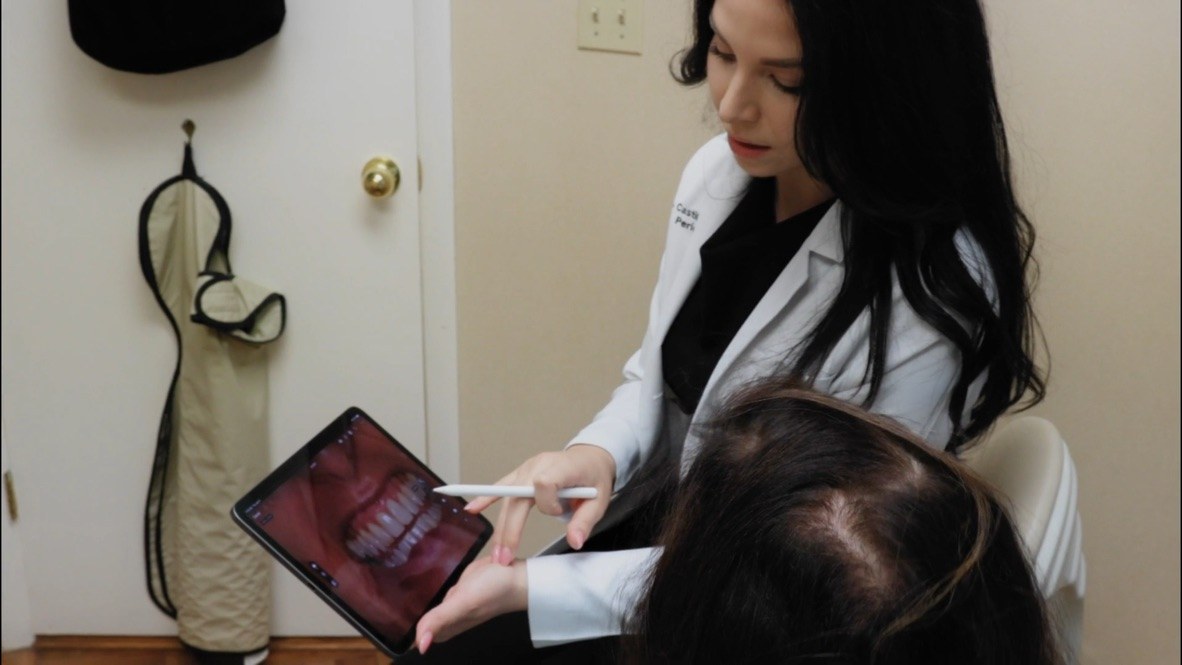
A clinician showing a patient images on a tablet.

A root canal doesn’t always finish the job. Sometimes infection lingers at the tip of the root, hiding where a standard retreatment can’t reach, keeping your tooth from healing. Apicoectomy fixes exactly that. At Edgard El Chaar, DDS, PC, peri-radicular surgery in NYC removes the infection at the root tip and seals the root end, so your tooth heals and stays in your mouth where it belongs.

What Is an Apicoectomy?

An apicoectomy is surgery that saves a root-canal-treated tooth when infection refuses to clear. It’s also called peri-radicular surgery or treatment of the tissue surrounding the root.

Here’s the problem it solves. After a root canal, the goal is to seal the pulpal space and stop bacteria from getting back in, letting the tissue around the root heal. When that healing stalls, infection lingers in the periradicular tissue at the tip of the root. An apicoectomy reaches that infection from a different angle: through the gum, straight to the source.

We remove the infected tissue, take off the very tip of the root, and seal the root end to lock bacteria out for good.

Here’s why a root canal sometimes falls short.

What We Do

Why Root Canal Treatment Sometimes Fails

Root canals work—most of the time. Success rates range from <strong>47% to 97%</strong>, a wide span that reflects how much the details matter. When treatment falls short, it usually traces back to a few specific causes.

The common culprits:

  • Spaces in the root-canal fillingGaps in the filling leave room for bacteria to survive and multiply.
  • A filling that's too shortWhen the filling doesn't reach the end of the canal, the untreated space becomes a haven for infection.
  • A preexisting periapical lesionAn infection already established at the root tip before treatment can persist afterward.

Any one of these lets bacteria hold their ground at the root tip. The tissue can't heal while the infection stays active. An apicoectomy clears it out, so healing finally happens.


How the Apicoectomy Procedure Works

Peri-radicular surgery is precise, careful work—and we treat it that way. Every step targets the infection at the root tip and seals the tooth against reinfection.

Here's how it unfolds.

  1. Numbing and Access

    We numb the area for your comfort, then make a small opening in the gum tissue near the affected tooth. This gives us direct access to the root tip and the infected tissue beneath.

  2. Removing the Infected Tissue

    We clear out the infected periradicular tissue surrounding the root tip by removing the source of the problem right where it lives. This is the infection that’s been blocking your tooth from healing.

  3. Removing the Root Tip

    We remove the very end of the root, the apex, where infection tends to concentrate and where the original filling fell short.

  4. Sealing the Root End

    We seal the end of the root to prevent further bacterial contamination. A tight seal locks bacteria out and protects the tooth going forward.

  5. Closing and Healing

    We close the gum tissue and let healing take over. With the infection gone and the root sealed, the periradicular tissue can finally recover.

    Open it up. Clear it out. Seal it tight.

Who Needs an Apicoectomy?

An apicoectomy is the right call when a root-canal-treated tooth won't heal, and standard retreatment isn't the answer. You may be a candidate if you're dealing with:

  • Persistent infectionInfection at the root tip that lingers after root canal treatment.
  • A failed root canalA treated tooth that never fully healed or flared up again.
  • A short or gapped fillingA root-canal filling that's too short or has spaces bacteria can hide in.
  • A preexisting periapical lesionAn infection at the root tip that treatment didn't resolve.
  • Symptoms that won't quitOngoing pain, swelling, or tenderness around a treated tooth.

If your treated tooth is still giving you trouble, don't write it off. An apicoectomy is designed to save teeth that standard retreatment can't.

The Benefits of an Apicoectomy

This procedure does one thing above all: it saves your natural tooth. Here's what that delivers:

  • Save your natural toothKeep the tooth you already have instead of extracting and replacing it.
  • Clear stubborn infectionReach and remove infection that conventional retreatment can't.
  • Allow real healingWith the root end sealed, the tissue around your root finally recovers.
  • Stop the sourceSealing the root prevents further bacterial contamination.
  • Protect your smileKeeping your natural tooth preserves your bite, your bone, and your smile.

Your natural tooth is worth saving. An apicoectomy gives it that chance.

What to Expect

Peri-radicular surgery is a focused, targeted procedure and we'll walk you through every step. Here's what your experience looks like.

  • A thorough evaluationWe examine your treated tooth and the tissue around the root to confirm an apicoectomy is right for you.
  • A comfort-first procedureThe area is numbed throughout, and we prioritize your comfort from start to finish.
  • Clear aftercareWe give you plain-language instructions so healing goes smoothly.
  • A follow-up planWe check your progress and confirm the tissue around your root is healing.

One targeted procedure. One expert team. One tooth saved.

Your Care Team

Endodontists at Edgard El Chaar

Endodontists specialize in treating the inside of the tooth. These are the doctors who provide this treatment here.

Each profile covers the doctor’s training, credentials and areas of focus.

View all doctors

The Practice

Why Choose Edgard El Chaar, DDS, PC

Surgical expertise

Focused skill in treating infection at the root tip with precision.

A tooth-saving focus

We work to preserve your natural tooth, not replace it.

Comfort-first care

We prioritize your comfort through every step of treatment.

Honest evaluation

We tell you exactly whether an apicoectomy is the right call.

A clear plan

Plain-language guidance from your first visit to your final follow-up.

Saving a tooth is serious work. Trust it to a team that treats it that way.

Common Questions

Frequently asked questions

Every mouth is different. At your consultation, we answer your questions about your own case.

Book a Consultation

An apicoectomy is a surgical procedure that saves a root-canal-treated tooth when infection won't clear. Also called peri-radicular surgery, it removes the infected tissue around the tip of the root, takes off the very end of the root, and seals the root end. This clears the infection that's blocking your tooth from healing and protects it from further bacterial contamination.

You may need one when infection lingers in the periradicular tissue around a root-canal-treated tooth and prevents it from healing. This happens when the original treatment left spaces in the filling, the filling was too short, or a periapical lesion existed before treatment. An apicoectomy reaches and removes that infection when standard approaches can't.

Root canal treatment succeeds 47 to 97 percent of the time. When it falls short, the causes are usually specific: spaces in the root-canal filling that let bacteria survive, a filling that's too short to seal the whole canal, or a preexisting periapical lesion at the root tip. Any of these lets infection persist and blocks healing.

We numb the area, then make a small opening in the gum near the tooth to access the root tip. We remove the infected tissue surrounding the root, take off the very end of the root, and seal the root end to prevent further bacterial contamination. Finally, we close the gum tissue and let healing take place.

After a root canal, the aim is to seal the pulpal space so bacteria can't get back in and the tissue around the root can heal. During an apicoectomy, we seal the end of the root itself—the part where infection concentrated and the original filling fell short. A tight seal locks bacteria out and protects the tooth going forward.

A root canal treats the inside of the tooth, cleaning and filling the canals from the crown down. An apicoectomy approaches from a different direction—through the gum to the root tip—to remove infection that a standard root canal or retreatment can't reach. It's a targeted surgery to save a tooth when conventional treatment hasn't fully worked.

We prioritize your comfort throughout the procedure. The area is numbed during surgery, and most patients manage any discomfort afterward with simple care. It's a focused, targeted procedure, and we'll give you clear aftercare instructions so healing goes smoothly.

That's the whole point. An apicoectomy is designed to save a root-canal-treated tooth that won't heal on its own. By removing the infection at the root tip and sealing the root end, it lets the tissue around your root finally recover—so you keep your natural tooth instead of extracting and replacing it.

The infection stays active, and your tooth can't heal. Ongoing infection at the root tip leads to persistent pain, swelling, and damage to the surrounding tissue and bone. Left untreated, the tooth may eventually need to be extracted. An apicoectomy clears the infection and gives your tooth the chance to be saved.

Warning signs include ongoing pain, swelling, or tenderness around a tooth that already had a root canal. A treated tooth that never fully healed—or flared up again—is a key indicator. The only way to know for sure is an evaluation, where we examine the tooth and the tissue around the root.

Start with a consultation. We'll examine your treated tooth, evaluate the infection around the root, and explain whether an apicoectomy is right for you. From there, we'll build a clear plan that clears the infection and gives your tooth a real chance to heal—so you know exactly what to expect before we begin.

Appointments

Take the First Step Toward Saving Your Tooth

A failed root canal doesn't have to mean losing the tooth. Book a consultation and let us examine your treated tooth, evaluate the infection, and build a plan that clears it out and gives your tooth a real chance to heal.

Peri-Radicular Surgery (Apicoectomy)Edgard El Chaar, DDS, PC Book a Consultation